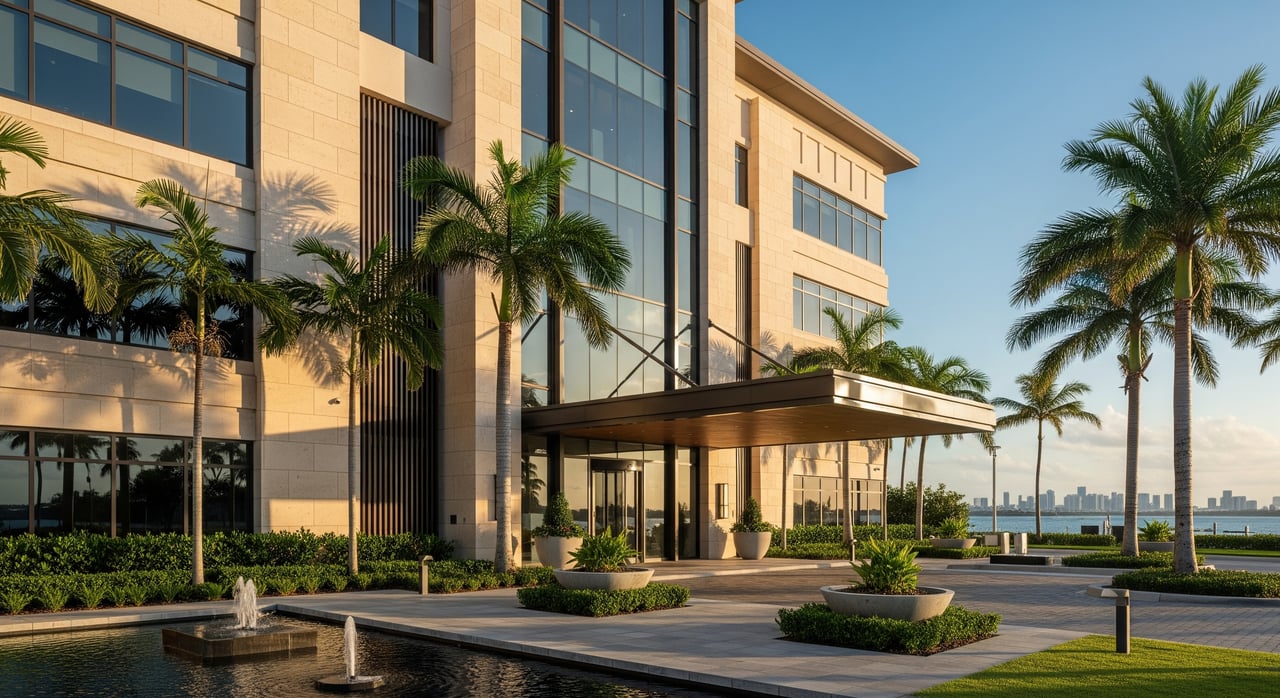
Thinking about opening, relocating, or investing in a medical office in Miami-Dade? Choosing the right submarket and building type can make or break your schedule, patient access, and ROI. You want a clear, practical way to read the market without getting lost in jargon. In this 101 guide, you’ll learn the core asset types, where demand concentrates around hospital anchors, what drives site selection, and the risks to plan for. Let’s dive in.
Miami-Dade market at a glance
Miami-Dade County has about 2.7 million residents and a highly multilingual population, including a large Spanish-speaking community. That mix shapes patient communications, staffing, and service planning. The area is home to major hospital systems, specialty centers, and a dense network of physician groups. Outpatient and ambulatory care use is high, consistent with Sunbelt metros.
Several macro trends are shaping this market. Care continues to shift from inpatient to outpatient settings, including ASCs, imaging, and infusion. Health systems are consolidating and expanding ambulatory footprints to capture referrals. Aging population segments and ongoing in-migration support steady demand in primary care and specialties such as cardiology, orthopedics, and oncology. Some general office spaces are being converted to medical use, but many require mechanical upgrades and new approvals.
Local constraints are real. Hurricane exposure and flood risk, especially in coastal areas, raise resilience and insurance costs. Parking and access can be tight in urban nodes. Municipal permitting and zoning add time and complexity to most projects.
What types of medical space you’ll see
Medical office buildings (MOBs)
Traditional multi-tenant MOBs cluster near major hospitals or along established medical corridors. Class A MOBs are newer or recently redeveloped, close to hospitals, and command premium rents. Class B and C buildings are often older, more suburban, and lower cost. Typical tenants include physician practices, imaging, therapy, and administrative clinics.
Value drivers in MOBs include tenant credit, proximity to hospital campuses, strong HVAC and power, and parking ratios that support patient flow. Long lease terms are common, but tenant improvements can be higher than general office.
Hospital-owned outpatient campuses
Health systems own and lease space on outpatient campuses to capture referrals. These properties often integrate surgery, infusion, and specialty clinics. If you need alignment with a system or you rely on hospital referrals, these campuses offer high visibility and built-in patient traffic.
Ambulatory surgery centers (ASCs)
ASCs are a growth engine for outpatient care. They require specialized build-outs with operating room ventilation, sterile processing, and recovery areas. Licensing and certification are strict, so plan for a structured timeline and a detailed compliance path.
Specialty centers
Imaging, cancer centers, and dialysis clinics have specific infrastructure needs. Imaging and radiation oncology require shielding, power, and vibration controls. Dialysis centers depend on water treatment systems and often need backup power.
Urgent care and retail clinics
These clinics often occupy retail strips or shopping centers. They favor convenience, quick access, and strong signage. Leases can be shorter and build-outs more retail-like, which can speed delivery if the location fits your patient base.
Medical office condos and single-tenant clinics
Physician-owner models are common in Miami-Dade. Ownership structure influences long-term occupancy and cap-rate expectations. Single-tenant clinics offer brand control and layout flexibility but place more operational risk on the practice.
Flex or converted office space
Converting general office to medical can work for primary care, behavioral health, and telehealth suites where code allows. Expect upgrades to HVAC, electrical, accessibility, and building systems. Floor loading, ceiling heights, and parking must align with clinical needs.
Practical notes across asset types
- Infrastructure upgrades for imaging, gases, scrub sinks, and generators raise capex and limit backfill flexibility.
- Patient parking ratios and easy access are critical for volume-driven clinics.
- Tenant improvements tend to be higher than general office, so structure lease terms accordingly.
Submarkets near hospital anchors
Miami-Dade’s medical demand clusters around key hospital campuses and medical corridors. Here is how to think about each area.
Miami Health District, Downtown, Civic Center
Anchor institutions include Jackson Health System and University of Miami Health, plus proximity to the Miami VA Hospital. Referral density is very high with strong demand for specialty clinics. Expect urban zoning, high land values, and, in some pockets, limited parking. Walkability is a plus for patient and staff convenience.
Coral Gables and South Miami
You are near University of Miami outpatient facilities and Baptist Health South Florida hospitals in adjacent pockets. Parts of Coral Gables and Coconut Grove include affluent patient bases and steady demand for elective specialties. Supply can be tight, and finishes often trend toward Class A.
Miami Beach and North Beach
Mount Sinai Medical Center anchors this coastal submarket. Visitor and tourism traffic create unique needs for urgent care, concierge medicine, and travel-related services. Coastal flood risk and higher insurance costs are key underwriting considerations.
Kendall, West Kendall, and South Dade
Baptist Health facilities anchor large suburban populations with strong demand for primary care and multi-specialty outpatient centers. Larger parcels, lower relative rents than urban cores, and robust parking make build-to-suit or larger clinic formats possible.
Doral, West Miami, Hialeah, and Medley
These areas benefit from highway access, including I-95 and SR-836, and a growing immigrant population. Industrial-to-medical conversions appear in select pockets. Logistics and staff commute times can be favorable, but confirm zoning and parking early.
Aventura, North Miami, and Sunny Isles
Aventura Hospital & Medical Center anchors this corridor. The area includes older population segments with demand for cardiology, orthopedics, and concierge services. Building quality varies, and coastal resilience planning is important.
Homestead and South Dade (rural edge)
Rents are typically lower and sites may be larger. Payer mix can differ from the urban core, and agricultural workforce needs shape service planning. For the right operator, these locations can offer cost-efficient growth and community impact.
Demand drivers you can measure
- Demographics: Aging residents, retiree in-migration, and population growth support baseline outpatient demand.
- Health system expansion: Hospital affiliations and practice acquisitions drive leasing near campuses and in strategic suburban nodes.
- Payer mix: Medicare, Medicaid, and Medicare Advantage shares by ZIP influence service mix and revenue stability.
- Procedure migration: More procedures move to outpatient settings, supporting ASCs, endoscopy, imaging, and infusion.
- Language and culture: Bilingual communications and staffing are essential in many neighborhoods to meet patient expectations.
Site selection checklist for Miami-Dade
- Proximity to referrals: Be near hospitals, emergency departments, and specialty hubs when your model depends on referrals.
- Access and transport: Prioritize highway access along I-95, SR-836, and the Palmetto. Near the Health District, consider Metrorail access for staff and patients.
- Building systems: Verify HVAC capacity, floor loads for imaging, ceiling heights for scanners, and power redundancy for dialysis and infusion.
- Zoning and permitting: Confirm municipal zoning and permitted medical uses. Ask about county versus city timelines.
- Visibility and wayfinding: For patient-facing clinics, street frontage, signage, and clear entries improve volume and experience.
- Competition mapping: Identify similar services within 5 to 10 minute drive times to gauge saturation and gaps.
- Workforce: Check access to nurses, techs, and admin talent. Labor markets vary by submarket.
- Climate resilience: Review elevation, flood zones, building hardening, and how risk affects insurance and operating costs.
Regulations and operations to plan for
Licensing and certification requirements apply to ASCs, dialysis centers, and imaging facilities. Florida agencies regulate these services and maintain facility data, so verify current rules early in your process. Some services may be subject to additional state oversight, so align your scope and timeline with the most current guidance.
Credentialing with hospital systems and insurance panels can take months, which affects revenue timing. Build this into your occupancy and cash flow plans. Parking, ADA compliance, and patient drop-off design are essential for outpatient performance and should be validated during site selection, not after lease execution.
Investment dynamics and risks
Medical tenants often sign longer leases with higher renewal rates than general office users. Assets with hospital-affiliated tenants or large physician groups tend to attract institutional capital. Historically, well-located MOBs have traded at tighter cap rates than general office because of longer lease terms, specialty improvements, and lower obsolescence risk. Ownership ranges from hospital systems and physician groups to private investors and healthcare-focused REITs.
Key headwinds in Miami-Dade include hurricane and flood exposure, along with insurance premium volatility. Regulatory and payer changes can alter revenue expectations. Office-to-medical conversions can be feasible, but mechanical limitations and zoning often drive capex higher than initial estimates. Conservative underwriting, realistic TI allowances, and resilience planning go a long way in this market.
Data sources and next steps
- Market analytics: Use trusted commercial real estate reports to benchmark rents, vacancy, and new supply for Miami-Dade MOBs.
- Health system plans: Review local hospital system updates for outpatient strategies, campus expansions, and affiliations.
- Licensing and regulation: Confirm facility licensing and certificate requirements with the appropriate Florida agencies.
- Demographics: Track population, age, language, and income trends to align services with local needs.
- Environmental and insurance: Review flood maps and resilience studies, and monitor insurance market updates.
At the site level, collect drive-time and walk-time data, map referral sources, and analyze payer mix by ZIP code. Confirm local permitting timelines and parking requirements with the relevant municipality before you finalize LOIs.
How Flagler helps you execute
You should not have to choose between speed and clinical quality. As a Miami-based healthcare real estate partner, Flagler combines development, capital alignment, and brokerage with proprietary healthcare analytics. That means evidence-based site selection, clinic-ready design standards, and a repeatable Class A product for MOBs and ASCs.
If you need a modern, clinic-ready building or campus in South Florida, Flagler’s branded MedSquare product and integrated platform streamline delivery from underwriting through lease-up. If you prefer to lease, Flagler’s tenant representation and corporate services align your clinical workflow with the right submarket, building systems, and access profile.
Ready to plan your next site with confidence? Connect with the team at Flagler RE Healthcare Solutions to Request a Free Data Analytics Consultation.
FAQs
Which Miami-Dade neighborhoods command the highest medical office rents?
- Hospital-adjacent and urban core areas, such as the Miami Health District and select Coral Gables locations, often see premiums due to referral density, Class A supply, and parking constraints; confirm current comps before committing.
Is it cheaper to lease or build an ASC in Miami-Dade?
- It depends on your specialty, projected volume, and build-out needs; ASCs require significant capex and licensing, so a build-to-suit can pencil for complex requirements while second-generation space may cut time and cost if systems fit your program.
Can general office buildings be converted to medical in Miami-Dade?
- Often yes, but feasibility hinges on HVAC capacity, electrical infrastructure, floor plate layout, accessibility, and zoning; expect higher capex and longer approvals than standard office improvements.
How important is hospital adjacency for outpatient clinics in Miami-Dade?
- Very important for specialty and complex services that rely on referrals, while primary care, urgent care, and some retail clinics can thrive in suburban corridors within 5 to 15 minute drive times.
What climate and insurance risks should I plan for in Miami-Dade?
- Hurricane and flood exposure can raise property and casualty insurance costs, and coastal locations may face higher long-term resilience expenses; plan for elevation, flood zone, and building hardening in your underwriting.
Who are the active investors in Miami-Dade medical office assets?
- Health systems, physician groups, private investors, and healthcare-focused REITs participate actively, with tenant credit quality and hospital proximity influencing pricing and cap rates.